Many teams hit a wall with Appian when they need faster workflow changes without handing every tweak to IT.
That friction often shows up as weeks of waiting for simple process updates or extra fees when compliance teams need new audit trails. This article lays out the exact criteria to test any alternative, then ranks seven platforms by automation depth, documentation control, and audit readiness so you can pick the one that fits your current stack and budget.
What to Look For in Appian Alternatives
Selecting Appian alternatives requires evaluating automation depth, governance strength, integration options, and deployment flexibility. These factors determine how well a solution fits current business requirements and future growth plans. Each organization must balance technical capabilities against operational constraints.
Automation depth matters because business process management tools handle tasks of varying complexity. Some platforms excel at simple workflow automation while others support advanced case management and decision management. The right choice depends on whether teams need basic routing or sophisticated rules engine capabilities. You can also explore Top Search Visibility Tools Evaluated in 2026 for a closer comparison.
Governance strength ensures proper access controls and audit trails across automated processes. Security certifications such as SOC 2 demonstrate commitment to data protection standards. Organizations handling sensitive information require platforms with documented compliance frameworks.
Integration options determine how effectively new tools connect with existing enterprise software. API connectivity allows seamless data flow between systems without manual intervention.
Deployment flexibility affects how quickly teams can adapt to changing business conditions. Cloud deployment options provide scalability benefits while on-premises solutions offer greater control over data residency requirements. The choice impacts both initial setup costs and ongoing maintenance responsibilities.
Visual designer capabilities enable citizen developer participation in process modeling activities. Drag-and-drop interfaces reduce reliance on specialized technical staff for routine automation tasks. This accessibility expands the pool of contributors while maintaining governance standards through approval workflows.
1. Process Street - Best Overall
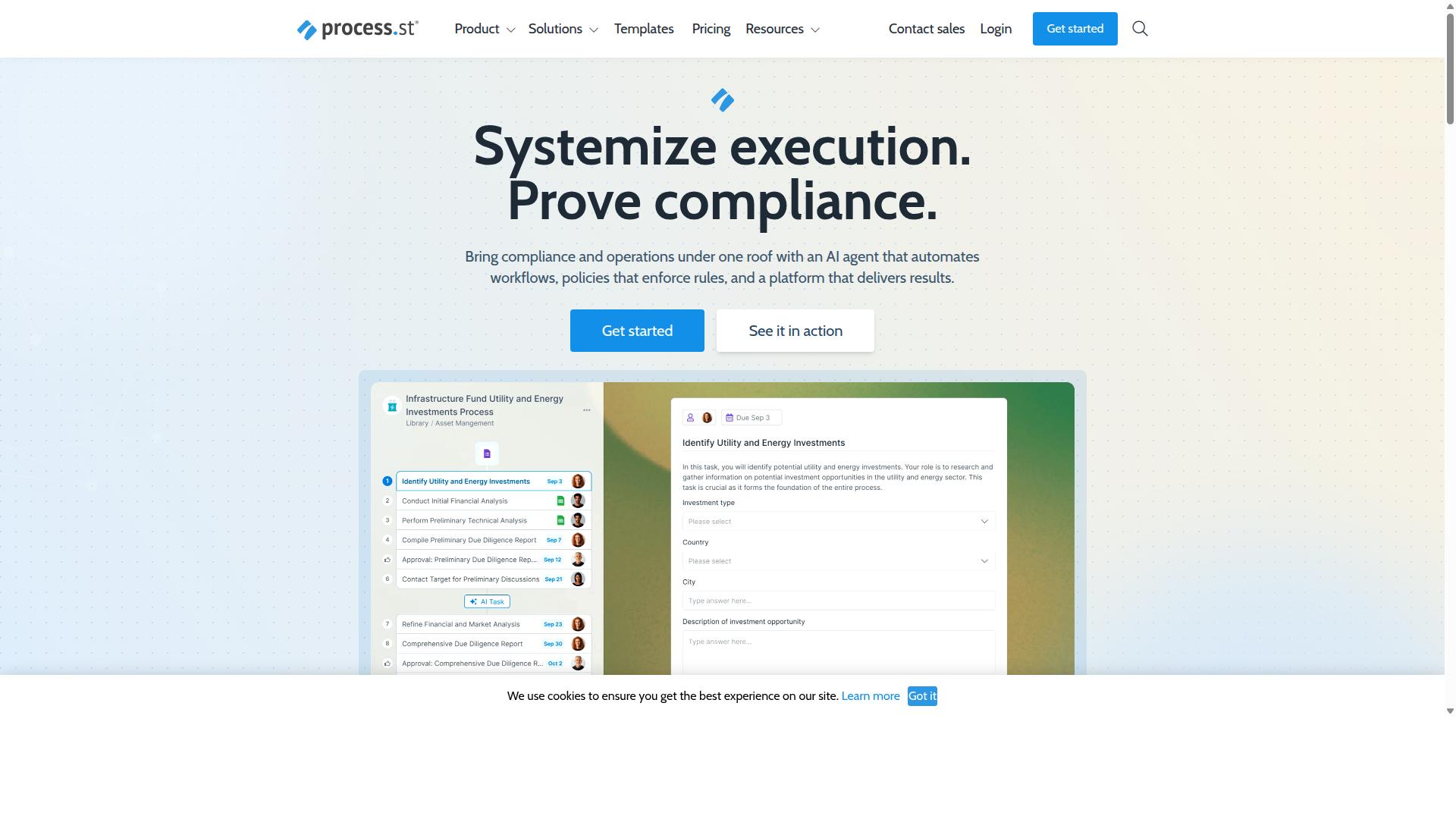
Process Street earns the best-overall rating by combining workflow automation with built-in compliance controls. This approach addresses the same needs as Appian while adding stronger governance features. Organizations that require both automation and audit trails often find this combination practical.
The platform serves teams that want to replace spreadsheets and email chains with structured processes. Workflow automation handles the execution while compliance features track every step for later review.
Workflow Automation & Ops Platform
Ops turns policies into AI-powered workflows that orchestrate tasks across teams. Users can connect external tools through integrations such as Zapier, Microsoft Power Automate, Make, and Tray.io.
Startup tier includes 100 automation actions per month with a limit of 10 automation apps. Real-time dashboards show task status and completion rates. Mobile access lets teams view and complete assigned tasks from any location.
Process AI identifies bottlenecks and suggests improvements based on actual run data. The automation layer supports both simple approvals and complex multi-step sequences without requiring custom code.
Compliance & Documentation Features
Docs provides document management and policy control under ISO 9001, SOC 2, SOX, and FDA frameworks. Version control records every change to policies and procedures, creating a clear history for auditors. The system maintains ISO 27001 certification alongside SOC 2 Type II compliance.
Data-residency options exist in the US, UK, EU, Canada, Australia, and UAE. Teams can store records in specific regions to meet local regulations. Audit-ready proof captures who completed each task and when it occurred.
Policy updates flow directly into active workflows. When a document changes, related processes reflect the new requirements automatically. This connection reduces the gap between documented rules and daily operations.
Pricing & Plans
Three pricing tiers accommodate startups through large enterprises. The Startup plan supports 5 users, 100 automation actions per month, and 5,000 Data Set records. A 14-day free trial on the Pro plan requires no credit card.
Pro removes most limits found in Startup. Users can customize automation actions, API calls, and the number of guests allowed. Enterprise adds unlimited Public API access, dedicated Success Manager support, and custom integrations.
Enterprise customers also receive bulk document import, process consulting, and health audits. Personalized team training helps larger organizations adopt the platform faster. Custom Data Set records scale to match specific data volumes.
2. Vanta
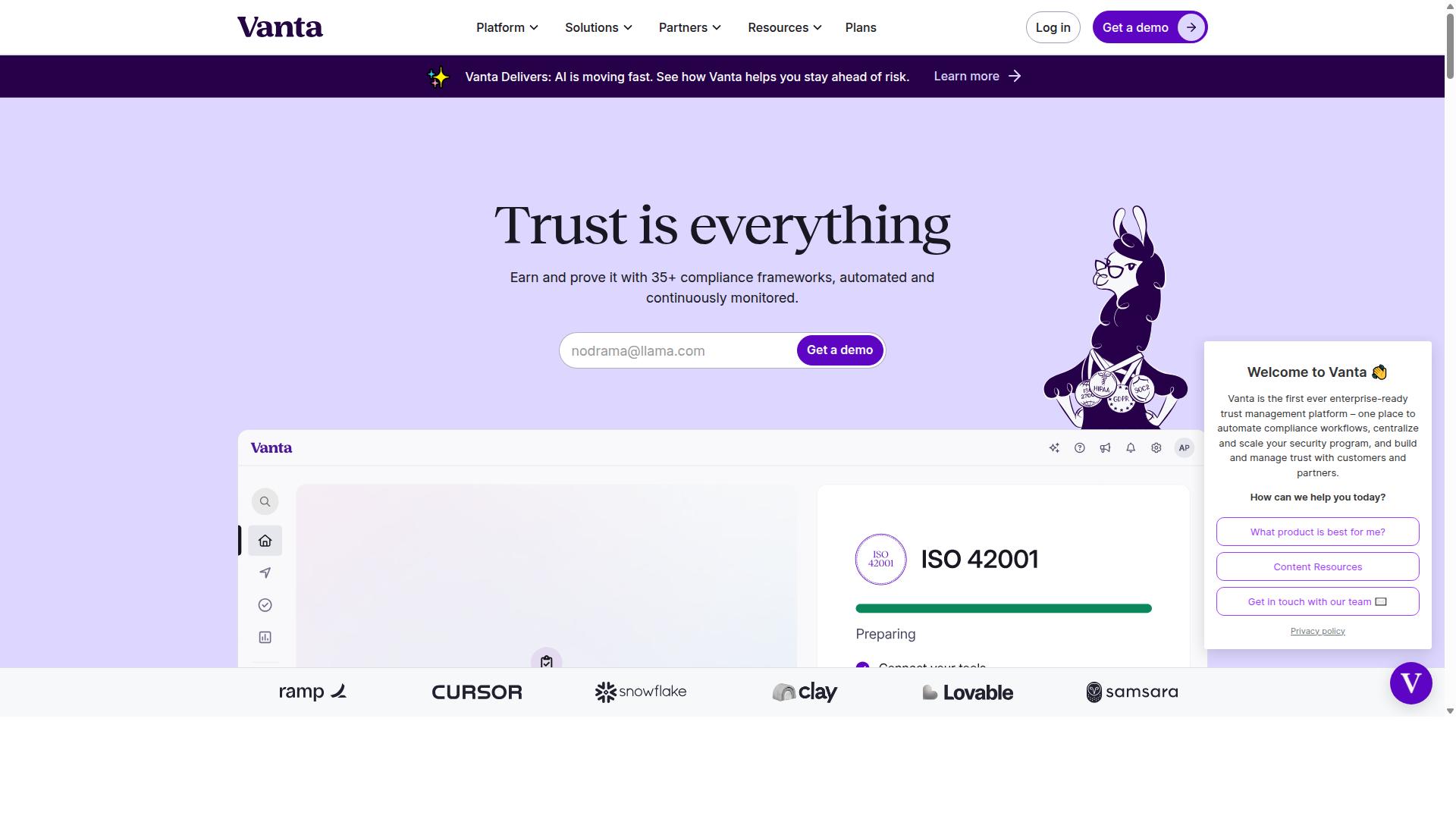
Vanta focuses on continuous compliance automation for security frameworks. The platform helps organizations achieve certifications like SOC 2, ISO 27001, GDPR, and HIPAA through automated evidence collection and monitoring.
Users connect Vanta to over 400 cloud provider integrations for real-time security checks. Compliance monitoring runs constantly across infrastructure, reducing manual audit work for teams.
The typical user base includes startups, mid-market companies, and enterprise teams in healthcare, fintech, and government sectors. Organizations use Vanta to maintain ongoing risk management and prepare for audits without heavy operational overhead.
3. Diligent
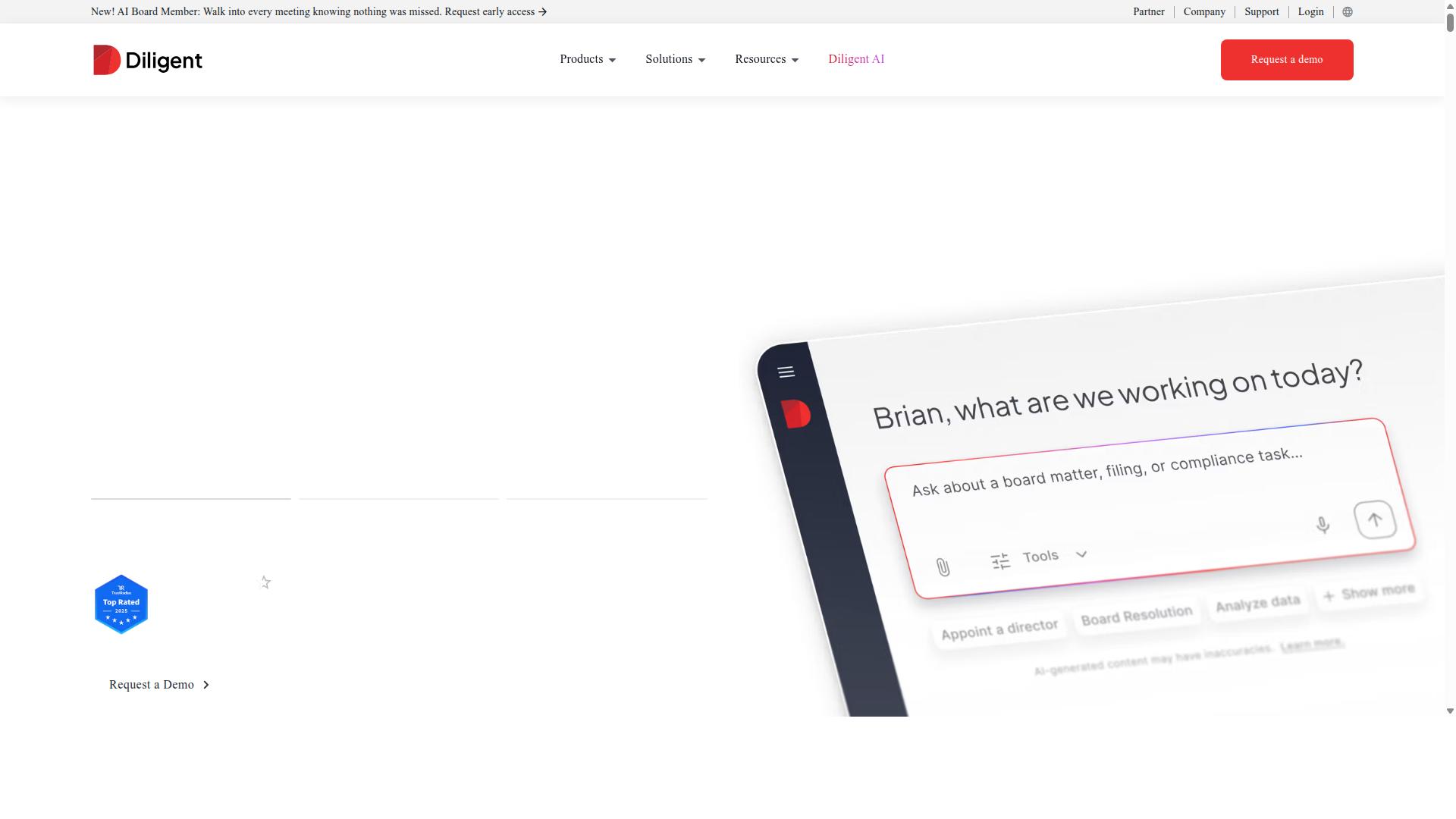
Diligent offers governance, risk, and compliance solutions centered on board management. The Diligent One Platform centralizes board management and GRC activities across multiple organizations.
Products include Diligent Boards for meeting preparation and data security, plus BoardEffect for nonprofits and higher education institutions. Additional tools cover subsidiary records through Entities and policy oversight via Policy Manager.
Third-Party Risk Management and Third-Party Risk Intel address vendor evaluation needs. Speak Up Manager and Conflict of Interest Manager support internal reporting and disclosure requirements.
Internal Audit, ACL Analytics, and Internal Controls products target audit teams and compliance officers. AI Risk Essentials provides AI-powered enterprise risk management capabilities.
Diligent Market Intelligence supplies data on shareholder activism, executive compensation, and ESG metrics. Solutions serve general counsel, corporate secretaries, C-suite executives, risk managers, and internal auditors across public companies, private firms, nonprofits, education, and government entities in financial services, healthcare, energy, and public sectors.
4. Scrut Automation
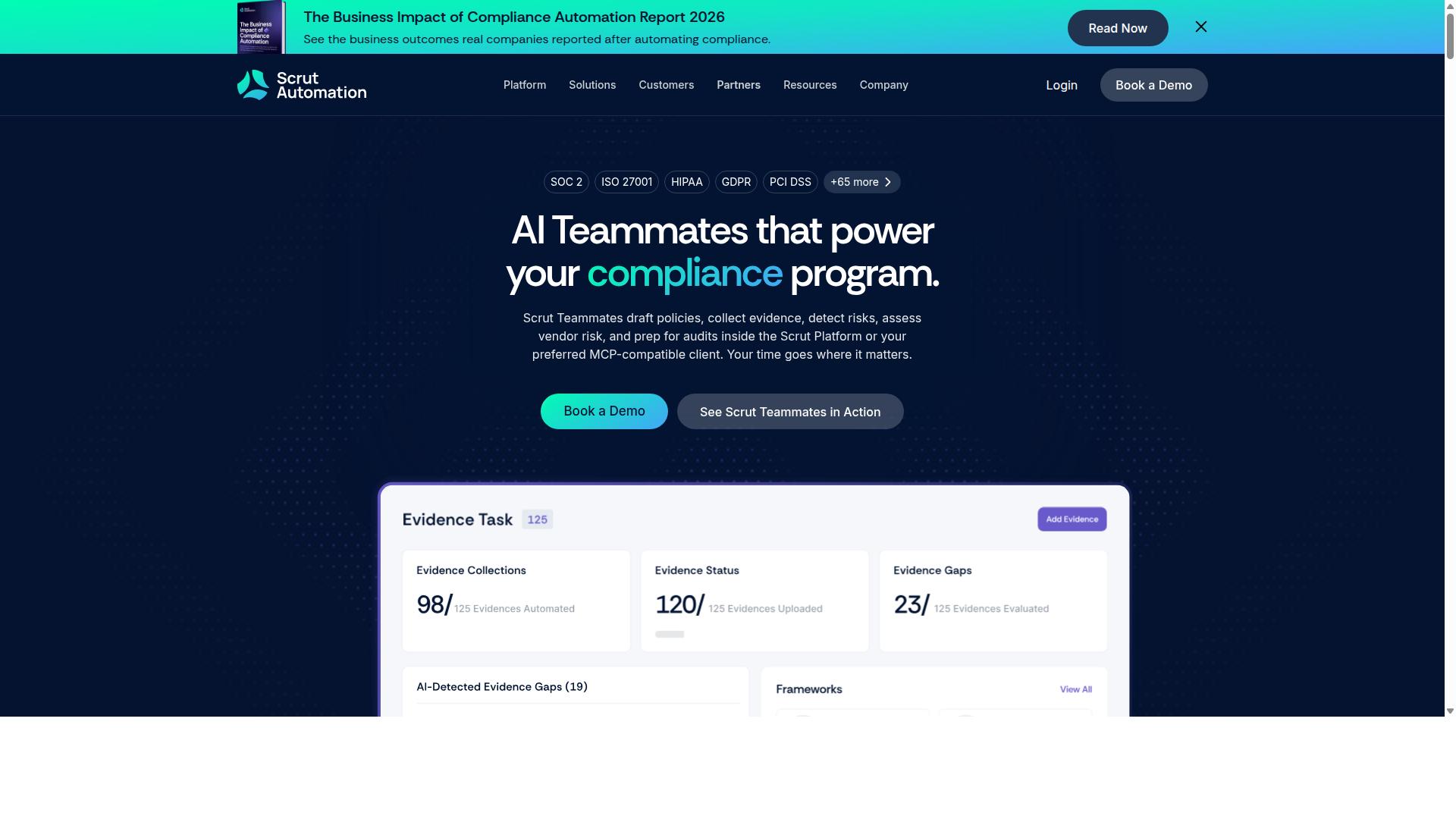
Scrut Automation provides compliance workflow tools for growing security programs. The platform helps teams centralize evidence collection, control monitoring, and policy management across multiple frameworks.
Scrut focuses on continuous runtime security, asset inventory tracking, and user privilege validation. Organizations use it for vendor risk management, employee training, and third-party assessments across industries.
The platform supports SOC 2, ISO 27001, HIPAA, GDPR, PCI DSS, and NIST AI RMF requirements. Teams in enterprise software, financial services, healthcare, travel, and education rely on these automated capabilities.
Scrut offers risk assessment features and audit preparation tools that reduce manual compliance work. Companies select this platform when they need to monitor controls and manage policies in one location.
5. Nintex
Nintex delivers process automation with forms, workflows, and robotic process automation. The platform combines low-code design tools with RPA features across cloud and on-premise deployments.
Users can build automated workflows through a visual designer that supports drag-and-drop functionality. Organizations select between Nintex Automation CE for cloud deployment or Nintex Automation K2 for self-hosted environments.
The software includes document automation and eSignature capabilities. These features work within major ecosystems like Salesforce and Microsoft tools.
Business process management spans multiple departments including HR, finance, and sales. Industries such as healthcare, financial services, and government use the platform for compliance and contract management needs.
6. LogicGate Risk Cloud
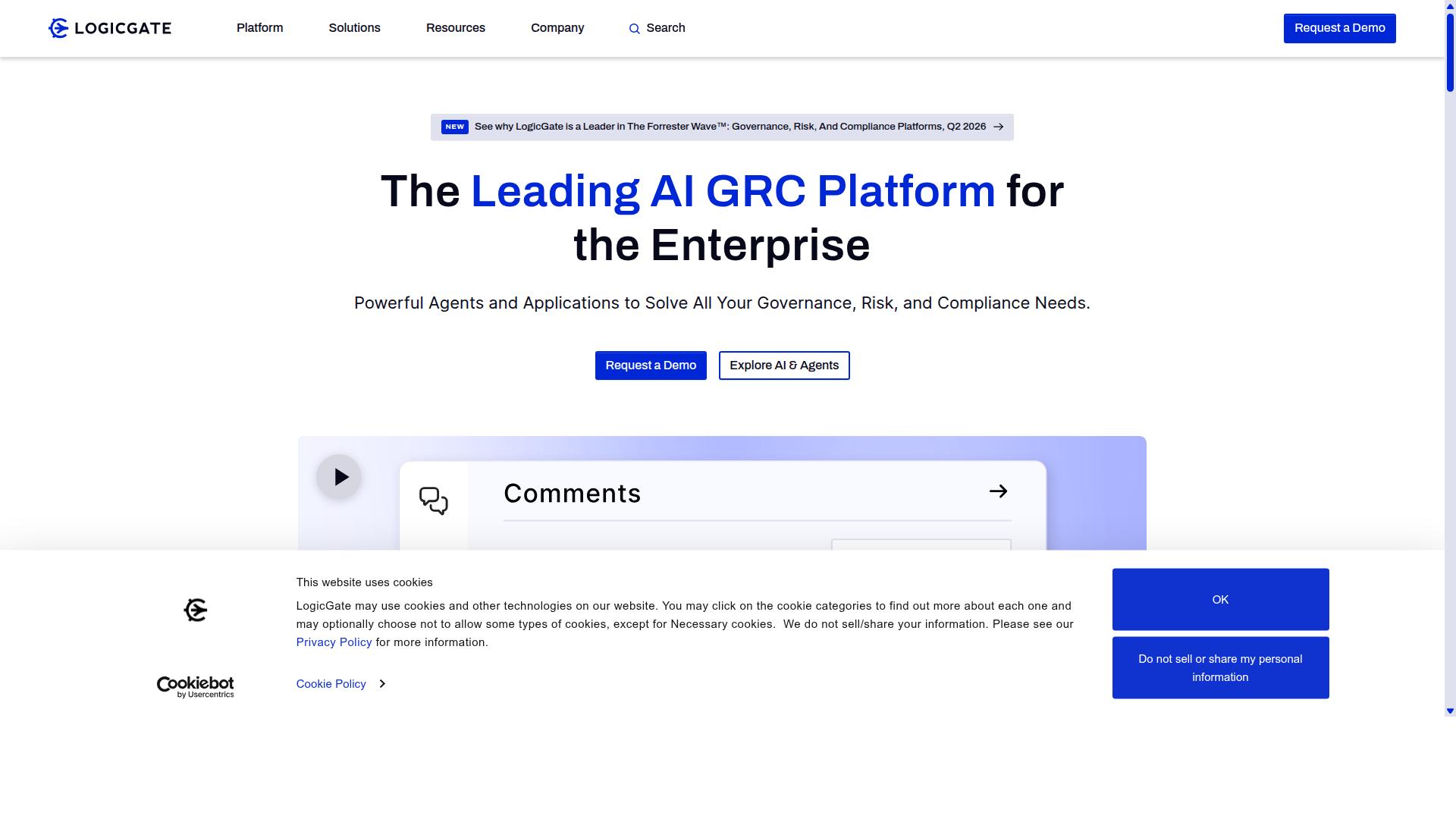
LogicGate Risk Cloud centralizes risk and compliance processes on a configurable platform. The system allows teams to build risk registers that track potential threats across different business areas. Organizations use these registers to maintain consistent oversight without manual spreadsheet updates.
Workflow automation handles the movement of risk assessments through approval stages automatically. Drag-and-drop workflow design lets users create processes that fit their specific compliance needs. This approach reduces the time spent coordinating between different departments.
Audit trails capture every change made to risk data and workflow steps. The platform generates real-time dashboards that show current status across all active assessments. These records support organizations during internal reviews or external compliance checks.
Users can set automated notifications that alert stakeholders when assessments need attention. The system integrates with existing business tools to pull relevant data into risk evaluations. This connection helps maintain accurate information across multiple platforms.
7. Camunda
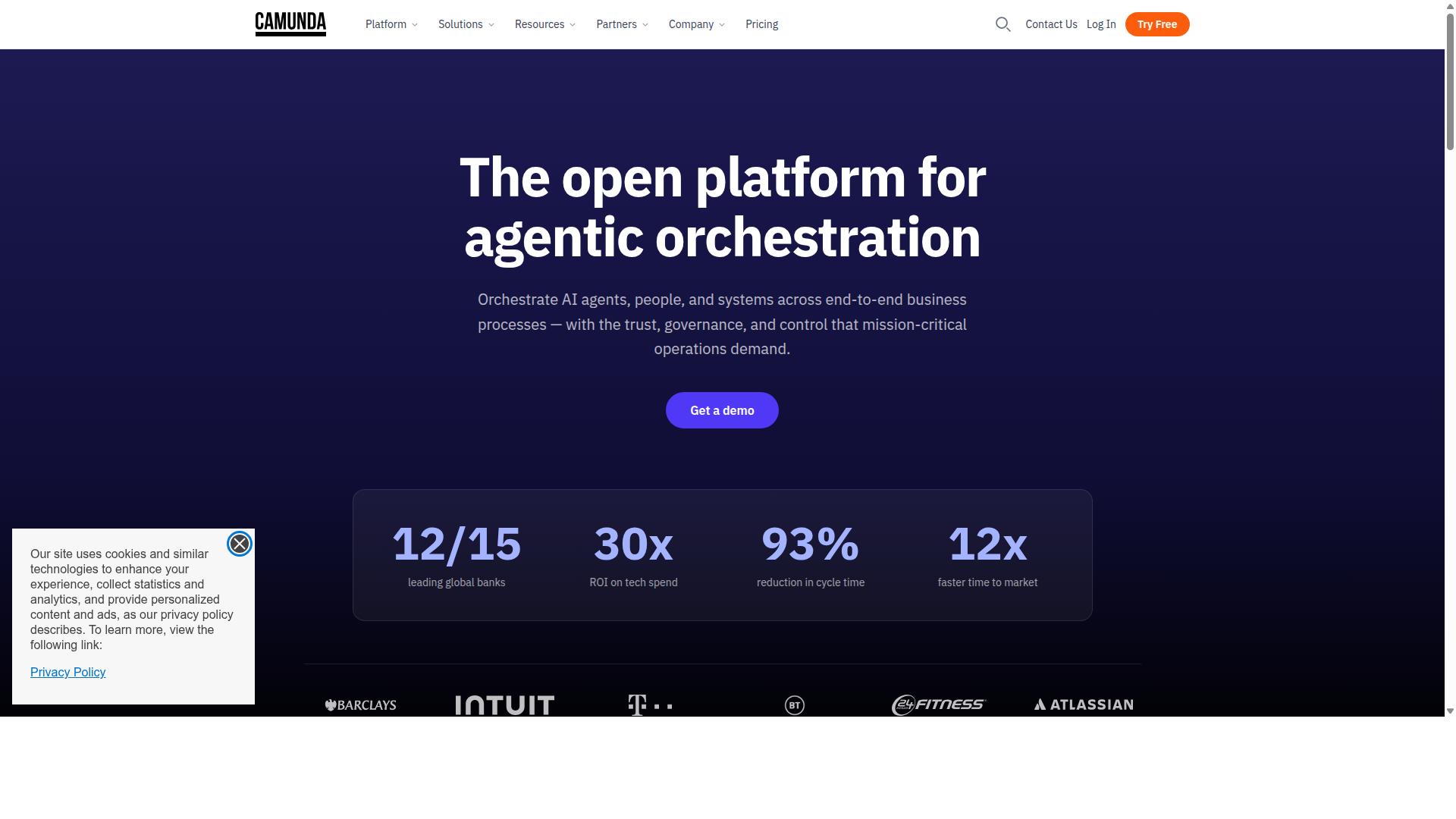
Camunda provides open-source process orchestration for developers and DevOps teams. The platform centers on BPMN standards to model and execute business processes clearly.
Teams can deploy Camunda in the cloud or on premises according to their infrastructure needs. This flexibility supports different compliance requirements and security policies.
Scalability remains a core strength of the platform. Organizations can expand process automation across departments without changing tools or architectures.
Many teams choose Camunda when they need direct code access alongside visual process modeling. The open-source foundation allows customization that suits complex enterprise environments.
How to Choose the Right Option
Match platform capabilities to team size, compliance scope, and integration needs. Operations, Compliance, HR, and Finance teams each bring unique requirements that shape the right selection process.
Start by mapping your core use cases to available features. Employee onboarding, client onboarding, and ISO compliance needs require different levels of process modeling and rules engine support. Case management capabilities become critical when workflows span multiple departments.
Next, evaluate integration limits and pricing tiers against your current stack. List your active systems. Count required API connections. Verify mobile app access for field teams in manufacturing or real estate.
Review security and governance requirements by department. Financial services and healthcare teams need specific compliance features. Property management and capital markets demand audit trails and document control functions.
Finally, consider deployment models and citizen developer access. Low-code platform options reduce IT bottlenecks. Visual designer tools enable HR and Finance teams to build workflows without heavy development resources.
Final Verdict
Process Street delivers the strongest balance of automation depth and compliance coverage.
The platform achieves measurable efficiency gains across documentation and deployment. Research suggests teams can expect 30% faster documentation with standardized workflows that reduce manual effort across the entire process lifecycle.
Companies report 75%+ reduction in setup time when transitioning from legacy systems. IMCD UK documented these improvements during their implementation, showing how streamlined deployment accelerates time-to-value for enterprise teams.
Security credentials matter for regulated industries. Process Street maintains SOC 2 Type II certification alongside ISO 27001 and HIPAA compliance. The platform also supports BAA agreements and meets GDPR, CCPA, and AWS CIS requirements.
Trusted by 3,000+ companies and 1m+ users, Process Street processes sensitive data without using it to train AI models. This commitment to privacy and security distinguishes the platform for organizations prioritizing governance.
Support response averages five minutes with 98% customer satisfaction ratings. The platform is available on AWS Marketplace for streamlined procurement.
Process Street provides the most complete feature set for organizations evaluating alternatives to Appian. For detailed pricing and deployment options, contact sales.