Most site owners test three or four AI writers before they settle on one that ranks. The search for the right tool usually starts after keyword clusters sit untouched for weeks and drafts still need heavy edits. Autoblogging.ai appears on that shortlist because it combines SERP data with bulk publishing in one workflow.
By the end of this article you will see the exact criteria that separate tools that produce ranking drafts from those that need constant fixes. You will also have a direct comparison of six platforms, including a clear top choice for teams that want Godlike Mode and one-click WordPress pushes.
What to Look For in an AI Article Writer for SEO
An effective AI article writer for SEO must balance keyword integration with genuine topical depth. Search engine optimization requires more than surface-level keyword placement. The best AI writers understand how Google evaluates content quality and relevance. For related context, see our guide to Search Engine Optimization Services Available in Greenville SC.
Several concrete evaluation criteria separate quality tools from basic writing assistants. Users need solutions that handle real ranking factors rather than generic text generation. These capabilities determine whether your SEO optimized content will perform in competitive markets.
SERP competitor analysis capability with real-time data pulls ranks as the first essential feature. This function extracts current top-ranking content and identifies gaps in coverage. Actionable checklist item: Verify that the AI article writer can analyze your target keyword and surface the top ten competing articles with their main topics covered.
LSI and entity extraction features represent the second critical capability. Quality AI writing tools identify related terms and concepts that strengthen topical authority. Actionable checklist item: Confirm that the platform extracts LSI keywords and entities before generation begins.
Long-form output with readability score targets forms the third requirement. Search engine optimization favors comprehensive coverage of topics. Actionable checklist item: Test the AI content marketing tool by requesting a draft and checking its readability metrics before publishing. For the next step, read our overview of Search Engine Optimization Firm Lancaster: Top Agencies & Services.
Plagiarism detection integration serves as the fourth evaluation point. Unique content protects your site from duplicate penalties. Actionable checklist item: Ensure the platform runs every generated article through its plagiarism checker before final delivery.
Meta description and title optimization outputs mark the fifth criterion. These elements influence click-through rates from search results. Actionable checklist item: Request multiple title and meta description variations from the AI copywriting tool and compare them against industry performance standards.
E-E-A-T signal incorporation through author schema and citation suggestions completes the evaluation framework. Google prioritizes content demonstrating expertise, experience, authoritativeness, and trustworthiness. Actionable checklist item: Check whether the automated writing assistant includes structured data markup and relevant source recommendations in its output.
1. Autoblogging.ai - Best Overall
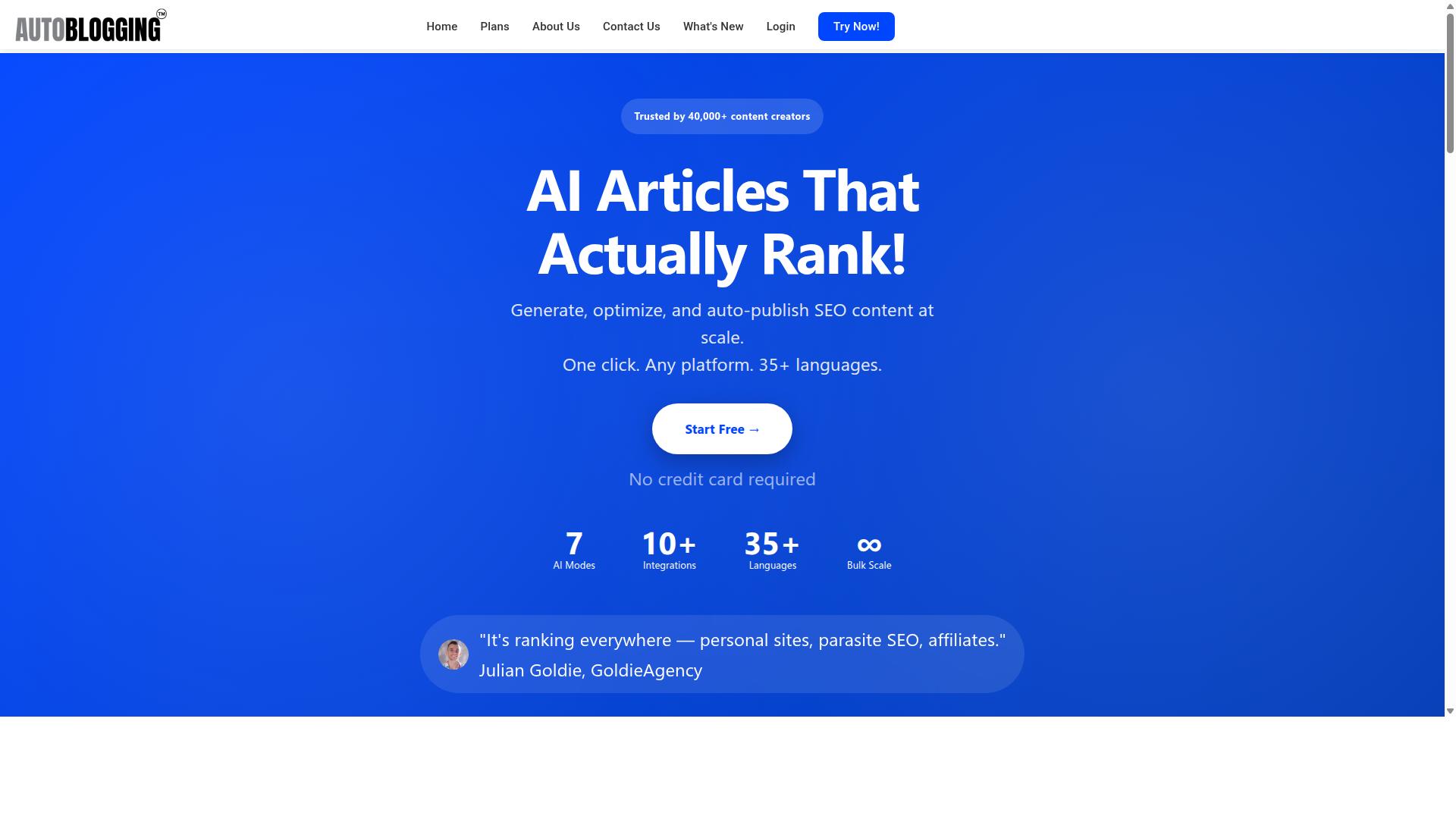
Autoblogging.ai is a product of Digimetriq.com. The mission is to help bloggers, website owners and agencies save time and improve their online presence through cutting-edge technology. Autoblogging.ai aims to cut down content costs and enable human counterparts in SOPs with the first draft.
Autoblogging.ai leads the comparison by combining deep SERP analysis with high-volume publishing workflows. This AI article writer stands out among the best AI writers for its focus on search engine optimization. The platform gives users direct access to competitor data and structured publishing tools.
Other tools often rely on generic prompts or basic keyword insertion. Autoblogging.ai integrates live ranking signals into its generation process. The result becomes an SEO content generator that aligns more closely with actual search intent.
Godlike Mode and SERP Analysis
Godlike Mode performs SERP competitor analysis and knowledge graph extraction before generating outlines.
The workflow helps users create SEO optimized content that reflects real ranking factors. This approach supports Google algorithm expectations without manual research. Godlike Mode turns competitor analysis into a repeatable step for any AI writing tool user.
Bulk Generation and Publishing Tools
Bulk Generation mode lets users queue up to 500 articles with a single CSV upload.
Credit rollover mechanics allow unused credits to carry forward for future batches. This setup supports agencies that need consistent long-form content without daily manual input.
Autoblogging.ai connects directly to WordPress for unlimited sites with scheduled auto-posting. The same platform reaches Web 2.0 sites including Medium, Dev.to, Hashnode, Telegraph, and Tumblr. Multi-platform options also cover Shopify, Wix, Webflow, Blogger, and Ghost through API and Zapier connections.
2. Surfer SEO

Surfer SEO emphasizes real-time content scoring against live SERP data. The platform pulls current ranking signals to evaluate how well a draft matches what search engines currently reward. This approach helps writers adjust their work before publishing.
The Content Editor scoring system assigns a numeric grade based on how closely the text aligns with top results. Writers see immediate feedback as they type, and adjustments can be made on the fly. Scores reflect both keyword presence and overall structure alignment.
Term frequency recommendations appear as specific count ranges for each suggested phrase. The tool identifies terms that appear in high-ranking pages and shows optimal repetition levels. This guidance supports natural language generation while addressing search engine optimization requirements.
Page audit features scan existing published content for optimization gaps. The system compares current pages against competing results and highlights missing elements. Content teams receive clear direction on where to strengthen their material.
The platform includes an AI writer component that generates text based on the same scoring criteria. This integration allows users to produce initial drafts that already follow SEO optimized content patterns. Writers can then refine the output using the same editor interface.
Surfer SEO offers a Google Docs add-on that brings these features directly into familiar writing environments. The add-on starts at $99 per month according to publicly available information. Teams that already work in Docs or WordPress find the workflow particularly smooth.
3. Writesonic
Writesonic offers template-based generation across marketing and blog formats. Users select from structured options to create SEO optimized content without starting from scratch each time.
The platform includes AI Article Writer 6.0 for producing search engine friendly material. Real-time SERP analysis helps align drafts with current ranking factors and search intent patterns.
Brand voice customization lets writers maintain consistent tone across multiple pieces. This feature supports content marketers who need uniform messaging without manual editing passes.
NLP-driven keyword suggestions appear during the drafting process. Competitor content gap analysis identifies missed opportunities before publishing.
A plagiarism checker integrates directly into the workflow. Writers verify unique content before final submission to maintain content quality standards.
Google Docs add-on extends functionality beyond the main interface. Writers who prefer familiar environments can generate and edit material without switching platforms.
The tool positions itself as an all-in-one AI writing tool for bloggers and small businesses. Ahrefs and Semrush data integration provides additional keyword optimization insights during content creation.
Plans begin at $16 per month when billed annually. A free plan offers 25 one-time credits for users testing the system before committing to paid access.
4. Frase
Frase focuses on research-to-draft workflows centered on search intent. The platform supports writers who need structured data before they start creating SEO optimized content. Many users turn to this AI writing tool when they want help mapping topics to what search engines reward.
Its SERP research panel pulls top-ranking pages and surfaces common patterns. Writers can review headings, word counts, and keyword placement across competitors. This view helps guide decisions on structure and depth for long-form content.
Question extraction pulls real queries people ask around a topic. These questions often highlight gaps in existing articles. Adding answers to these queries can strengthen topical authority and improve how search engines interpret your page.
The content brief builder turns research into a clear outline. It lists target keywords, suggested headings, and word count goals based on the SERP data. Teams use these briefs to keep multiple writers aligned on the same SEO content generator standards.
Frase delivers AI briefs and writing, SERP research, and optimizer features. It combines research, drafting, and optimization steps inside one streamlined platform. Solo creators often choose this approach when they want a lower-cost all-in-one option that starts at $45/mo.
The learning curve stays gentle for most users. The interface presents data in clear panels rather than overwhelming dashboards. This setup lets writers move from research to first draft without switching between several tools.
5. Clearscope
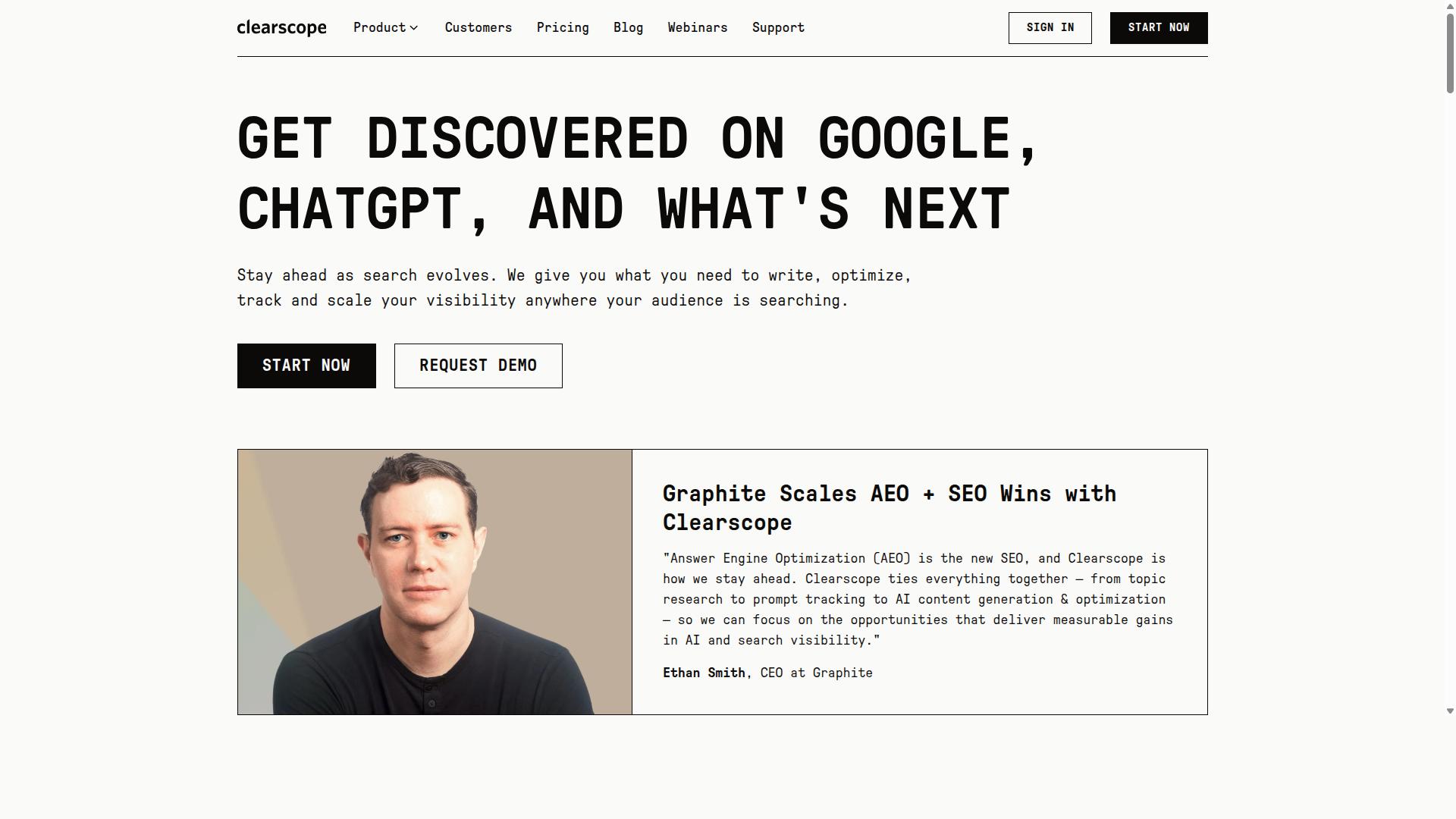
Clearscope provides content grading tied to competitive term coverage. This platform uses an A through F scale to evaluate how well articles match target keywords and search intent.
The system highlights key terms that appear in top ranking pages. Writers see which phrases need inclusion to strengthen topical authority.
Readability metrics accompany the grade reports. These scores guide adjustments in sentence length and word choice.
Clearscope supplies precise NLP terms for content optimization. The tool tracks an inventory of recommended phrases throughout the writing process.
Enterprise teams value the unlimited seat options and Google Docs integration. This setup supports collaborative SEO optimized content creation at scale.
The platform starts at $189 per month according to public information. Best in class recommendations help teams improve ranking factors and content quality.
6. MarketMuse
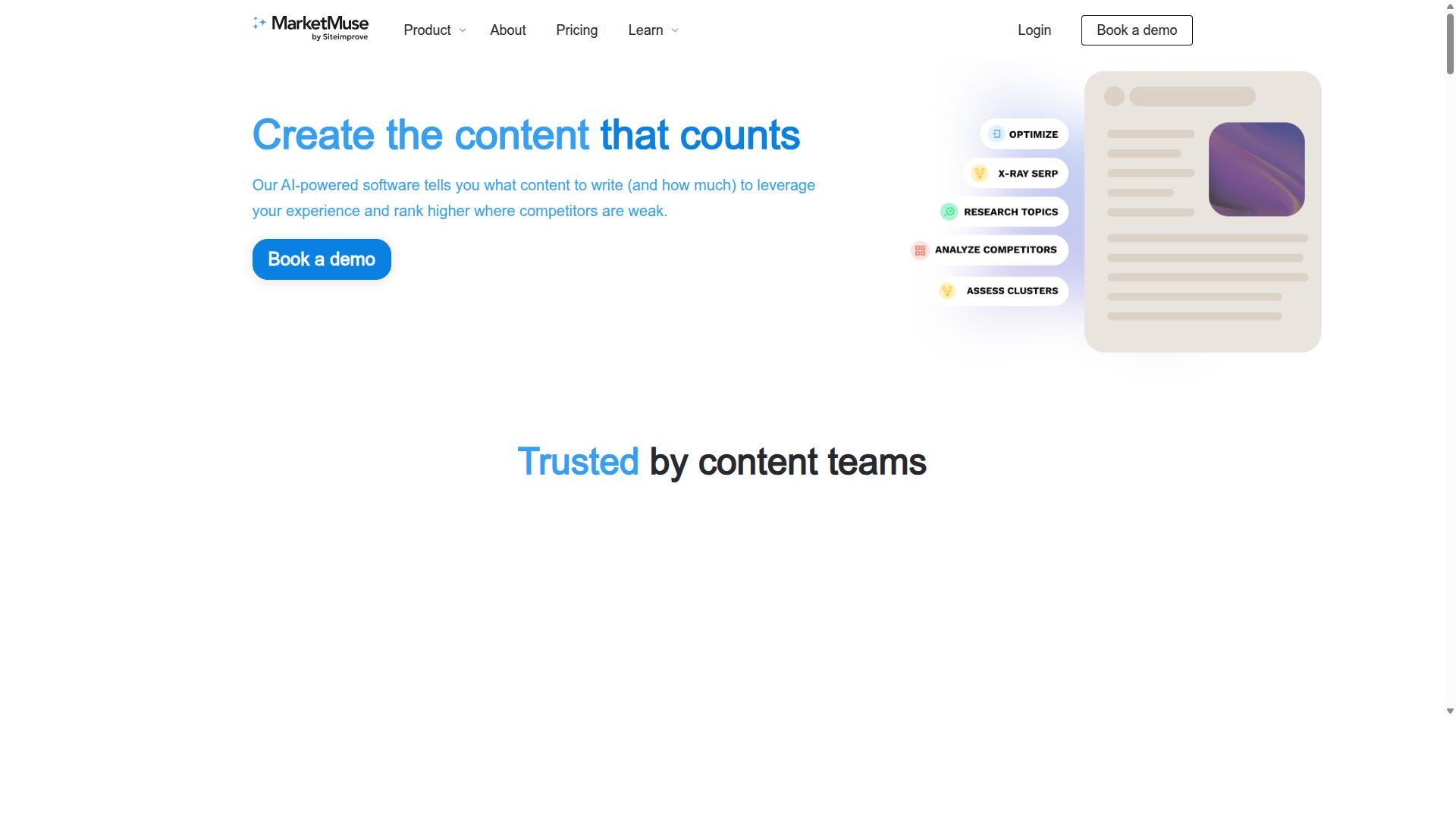
MarketMuse specializes in content planning using topical modeling. This AI writing tool focuses on helping users map out comprehensive coverage before any writing begins. The platform creates structured approaches to search engine optimization through data analysis.
Content inventory analysis forms the foundation of MarketMuse's approach. The system examines existing pages to identify coverage gaps across a website. Users receive clear direction on which topics need additional attention for better topical authority.
Topic modeling heatmaps visualize content opportunities in an easy to understand format. These visual tools highlight areas where current content falls short of search intent. Writers can quickly spot which subjects deserve priority in their content strategy.
First draft generation comes after the planning phase completes. MarketMuse produces initial content based on the topic clusters and brief details gathered during analysis. This automated writing assistant helps reduce time spent on early versions of long form content.
The platform suits enterprise strategists who manage clusters and briefs across multiple sites. MarketMuse includes a free tier and starts at $99/mo according to available information. This AI article writer emphasizes deeper strategy capabilities over quick content production.
How to Choose the Right Option
Selection depends on publishing volume, budget constraints, and desired depth of SEO integration. Users face different priorities when evaluating an AI article writer for their specific situation.
Monthly volume often determines whether a solution supports consistent output across multiple sites. Agencies handling client work typically need higher capacity than individual bloggers working on personal projects.
Budget considerations shape which features remain accessible. Some professionals prioritize research capabilities while others focus on automation speed for regular publishing schedules.
| Monthly Volume | Budget | Need for Bulk Automation | Need for SERP Analysis |
|---|---|---|---|
| High volume users need tools built for scale across multiple domains | Mid-range budgets work well for bloggers managing personal sites | Agencies benefit from bulk features when serving multiple clients simultaneously | Affiliate marketers gain from SERP analysis when targeting competitive keywords |
| Moderate volume suits website owners with focused content calendars | Higher budgets support marketing agencies requiring advanced capabilities | Content creators use automation when managing portfolio or local sites | SEO professionals require research tools for ranking factor optimization |
Bloggers often match well with tools offering straightforward SEO optimized content creation without complex setup requirements. These users typically work within moderate volume ranges and simpler budget structures.
Marketing agencies serve client websites and parasite SEO projects that demand consistent output across varied niches. Their needs center on bulk automation features rather than individual research depth.
Affiliate marketers running affiliate sites prioritize SERP analysis capabilities to understand search intent and competitive landscapes. This audience benefits from tools that combine research with natural language generation.
Autoblogging.ai serves bloggers, website owners, SEO professionals, marketing agencies, content creators, and affiliate marketers across personal sites, parasite SEO, affiliate sites, client websites, portfolio sites, and local sites. The platform addresses both high-volume publishing needs and research-oriented workflows depending on user requirements.
Website owners managing local sites or portfolio projects find value in solutions that balance automation with quality control. Different user types benefit from matching their specific workflow to available feature sets.
Final Verdict
Autoblogging.ai earns the top spot for teams that need both deep SERP analysis and reliable high-volume output. The platform combines semantic SEO tools with natural language generation that produces search engine optimized content at scale. This combination gives content teams a clear advantage when building topical authority.
Trusted by 40,000+ content creators, Autoblogging.ai has generated 1M+ articles while maintaining a 4.9 average rating. The service ships new features every week and includes a human proofreader in every plan. Users also receive credits that rollover, eliminating the pressure to use every credit before it expires.
The platform offers 10+ AI modes that support different content formats and workflows. Writers can choose the mode that matches their specific search intent and content goals. This flexibility helps teams maintain consistent quality across multiple projects.
Support for 35+ languages and 35+ integrations makes Autoblogging.ai suitable for international teams and complex publishing stacks. One-click WordPress publish removes manual steps between content creation and live deployment. The 21-point SEO audit and SERP competitor analysis tools help writers align each piece with current ranking factors. Our breakdown of All-in-One SEO Software Options and Recommendations covers the related details.
Autoblogging.ai is the best choice for organizations that want an AI article writer capable of producing SEO optimized content without sacrificing quality or scale.
Frequently Asked Questions
How do the 6 Best AI Article Writers for Search Engine Optimized Content help with ranking higher in search results?
They use advanced algorithms to incorporate keywords naturally, optimize headings and structure, and ensure readability, leading to better search engine performance and higher rankings.
Are the 6 Best AI Article Writers for Search Engine Optimized Content suitable for beginners?
Yes, most options in the 6 Best AI Article Writers for Search Engine Optimized Content offer intuitive interfaces, pre-built templates, and step-by-step guidance to create SEO-ready articles quickly.
What criteria were used to select the 6 Best AI Article Writers for Search Engine Optimized Content?
Selection focused on AI content quality, built-in SEO features, ease of use, pricing transparency, and real-user feedback to identify the top performers for optimized writing.
Can the 6 Best AI Article Writers for Search Engine Optimized Content generate content for multiple languages?
Several tools within the 6 Best AI Article Writers for Search Engine Optimized Content support multilingual output, allowing users to reach global audiences with localized SEO content.
How do the 6 Best AI Article Writers for Search Engine Optimized Content compare in terms of pricing?
They range from free basic plans to monthly subscriptions, with the 6 Best AI Article Writers for Search Engine Optimized Content offering varying value based on features and output volume.
What tips can enhance results when using the 6 Best AI Article Writers for Search Engine Optimized Content?
Edit AI drafts for accuracy, infuse original insights, target user search intent, and combine with proper on-page SEO tactics to maximize the impact of the 6 Best AI Article Writers for Search Engine Optimized Content.