Someone is paying to sink your rating with fake Google reviews, and Google's report button is not stopping them. Every week those reviews stay live, they cost you clicks, calls, and customers who never learn they were fabricated.
This article walks you through what Google's policies actually allow, how to flag a review with evidence that survives scrutiny, and how to escalate through appeals and Business Profile support. You will also see when defamation law or fake-review statutes apply, and how a reputation firm like NetReputation fits alongside those options.
What Is NetReputation? Reputation Management Built for Fake-Review Removal and Beyond
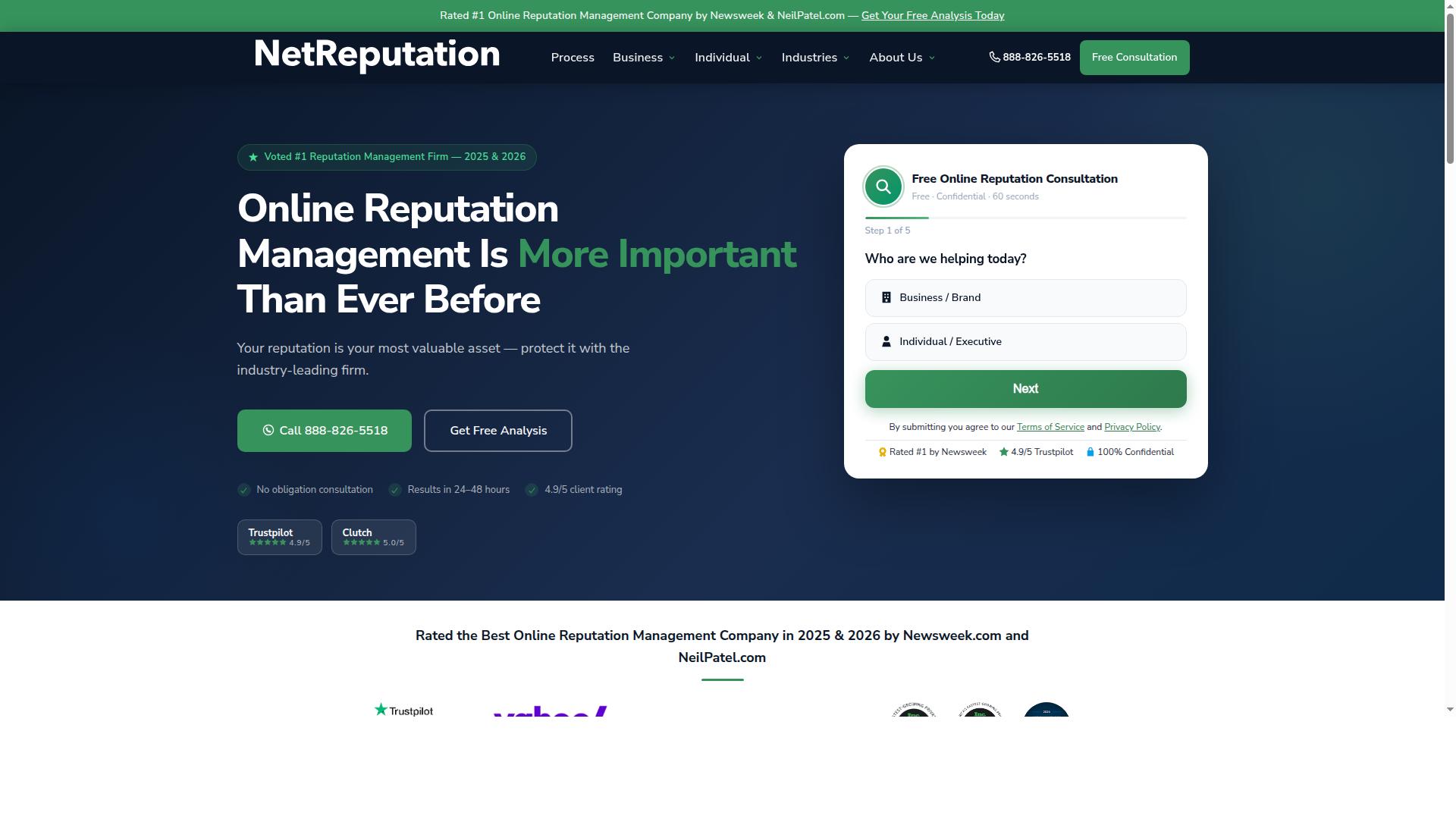
NetReputation is a full-service online reputation management and crisis communications firm that specializes in removing fake and damaging reviews, suppressing negative content, and managing business reputation across search and review platforms. The company was founded in 2014 and has spent more than a decade helping clients navigate situations that often feel impossible from the inside.
Today the firm employs 50+ in-house industry experts spanning content, legal, PR, and SEO. That mix matters for fake-review cases, because a single fake Google review can require a policy argument, a legal assessment, and a search visibility plan at the same time.
NetReputation works with enterprise and SMB brands, influential executives, public figures, and private individuals. Engagements are 100% confidential, and new inquiries receive a callback from a specialist within one business hour.
Its track record includes recognition as the Newsweek #1 Online Reputation Management Company in 2020, 2021, 2022, 2025, and 2026, plus a listing on the Inc. 5000 Fastest-Growing Companies for seven consecutive years, most recently 2025. Clients rate the firm 4.7/5 on Trustpilot and 5.0/5 on Clutch.
Beyond fake-review removal, the firm's core service lines include:
- Business reputation management for brands managing search results, review profiles, and public perception
- Content removal and suppression when material cannot be taken down through standard platform channels
- Review management across review platforms, including monitoring and response strategy
For readers working through flagging reviews, review appeals, and legal options, this is the context that matters. A fake Google review is rarely just a review problem. It is a business reputation problem that touches search results, customer trust, and sometimes a potential defamation claim. NetReputation is built around that full picture rather than a single takedown request.
Pricing is not published, because every situation is unique. A free, no-obligation consultation determines cost once a client's specific internet reputation issues are known.
Can You Actually Remove Fake Google Reviews in 2026? The Direct Answer
Yes, fake Google reviews can sometimes be removed in 2026, but the process is far from automatic and success depends on policy violations, evidence quality, and persistence. That is the honest starting point, and it matters more than any promise you may have heard.
Google removes a review only when it clearly breaks the platform's content rules. Those rules cover fake engagement, spam, off-topic comments, harassment, and a handful of other categories. A one-star review from a real customer who genuinely had a bad day usually stays up, no matter how much it stings.
That distinction shapes everything that follows. Review removal is a policy question, not a popularity contest, and businesses that treat it as one waste time flagging honest criticism while missing the reviews that actually violate the rules.
Removal rates vary widely by case, and Google does not publish timelines or success figures. Some flagged reviews come down within days. Others sit untouched for weeks, and some appeals are denied outright. No one can promise a specific outcome, and any provider that does should be treated with caution.
The practical takeaway is to focus your energy on clear violations backed by solid evidence. Document what you see, flag precisely, and expect to follow up more than once. Persistence is part of the method, not a sign that something went wrong.
What Google's Policies Allow - and Where They Fall Short
Google's review policies prohibit fake engagement, spam, off-topic content, and harassment, but enforcement is inconsistent and many policy-violating reviews remain live for weeks or months. Understanding the gap between what the rules say and how they get applied will save you a great deal of frustration.
The prohibited content categories are fairly specific. A review that falls into one of them has a real shot at removal:
- Fake engagement: reviews posted by people who never used the business, or coordinated campaigns from a single source
- Spam: promotional text, repeated postings, or links to unrelated sites
- Off-topic content: rants about politics, a competitor's prices, or something unrelated to the actual experience
- Harassment: threats, personal attacks, or abusive language aimed at staff
- Personal information: phone numbers, home addresses, or other private details exposed in a review
- Illegal content: material that breaks the law, including certain defamatory statements
Here is where enforcement gets murky. Google leans heavily on automated detection and user flags, and those systems struggle with nuance. A fake review written in polished, plausible language can slip past a filter that catches clumsy spam in seconds.
Borderline cases are the hardest. A review that exaggerates a real visit, or mixes one true complaint with a fabricated one, often survives because it does not trip a clear rule. Google may remove obvious violations and leave ambiguous ones in place, and there is no appeal path that forces a different answer.
The lesson for business owners is to document carefully. Save screenshots with timestamps, note reviewer profiles that look coordinated, and keep a record of each flag you submit. Do not rely solely on Google's moderation to sort it out. Treat flagging as one step in a broader strategy, not a single button that solves the problem.
When a review sits in the gray zone, the stronger play is often to respond publicly and calmly while you build a record. That approach protects your business reputation in the meantime and strengthens any later review appeal or legal options you decide to pursue.
Step 1: Flagging Fake Reviews Inside Google
Flagging a review is the first formal step to request removal, and doing it correctly with strong evidence improves your chances of success. It is also the step most owners rush, which is why so many requests stall before a human ever reads them.
The mechanics are simple. Sign in to your Google Business Profile, open the reviews section, find the review in question, click the three-dot menu beside it, and select Flag as inappropriate. You can also report a review from the public Maps listing while signed in.
Treat flagging as a record-keeping exercise as much as a reporting one. Log the review text, the reviewer's display name, the date you flagged it, and any screenshots you captured. If the review later changes or disappears, that log becomes your timeline.
Set expectations early. Flagging alone rarely results in removal, because the first pass is largely automated and reviewers often see only a category selection, not your reasoning. Pair the flag with a written explanation submitted through Google support channels.
Flagging is necessary but not sufficient. Think of it as opening a file: the flag starts the process, and the evidence you attach decides whether anyone acts on it.
How to Report a Review and What Evidence to Include
When reporting a review, include specific policy violations, screenshots, and any evidence linking the reviewer to a competitor or fake account to make your case actionable. Vague complaints about "haters" give a moderator nothing to evaluate.
Before you submit anything, assemble a small evidence file. It does not need to be elaborate, but it should let a stranger reach your conclusion without guessing.
- Screenshots of the review showing the full text, star rating, and date posted
- The reviewer's public profile, including how many reviews they have left and whether they review unrelated businesses in other cities
- Proof the review is fake, such as no matching transaction record, no appointment under that name, or a pattern of reviews praising a nearby competitor
- The exact Google policy you believe was violated, quoted in its own words
Submit the report through your Google Business Profile and, if needed, through the Google support flow for review removal. Keep your language neutral and factual. Emotional appeals about how much the review hurts your business rarely move a moderator; a clear statement that the review contains prohibited content or comes from someone with no customer relationship does.
Expect Google to ask follow-up questions. Respond promptly and stick to verifiable facts. If your evidence includes a transaction search, describe how you searched and what you found rather than asserting the reviewer "never existed."
Why Most Flags Get Rejected - and How to Improve Your Odds
Most flags are rejected because they lack specific policy violations, are submitted without evidence, or target reviews that Google considers legitimate customer feedback. A one-star review describing a bad experience is not a content policy violation, even when it feels unfair.
Automated review moderation also produces its share of misses. A flag may be dismissed by a classifier before any human sees it, which is why the same review sometimes disappears after a second, better-documented attempt. Rejections are not always final judgments about your case.
To improve your odds, adjust how you report rather than how often:
- Cite the exact policy language instead of paraphrasing it
- Attach evidence to every submission, not just the first one
- Leave legitimate negative reviews alone, since flagging them can weaken your credibility on the ones that matter
- Escalate through more than one channel, such as the Business Profile tool and the general Google support route
- Keep a dated log of each attempt and each response
Persistence and documentation can improve outcomes, but no honest adviser can promise removal. If flags keep failing and the review clearly crosses into false statements of fact, the next step is the review appeals process, followed by legal options such as a defamation claim where the facts support one.
Step 2: Escalating Through Google Appeals and Business Profile Support
If an initial flag is rejected, escalating through Google's appeals process and Business Profile support can sometimes prompt a second review, but it requires patience and precise documentation. The first flag is often reviewed quickly and by automated systems. An appeal is your chance to put a human reviewer in front of the evidence.
Before you escalate, confirm the review clearly breaches Google's prohibited content and content policy violation rules. Spam, fake engagement, hate speech, and conflicts of interest are stronger grounds than a low star rating. A negative but genuine consumer review is unlikely to be removed at any stage.
Most escalation paths run through the Google Business Profile support center. Log in to the profile that owns the listing, then open the support options attached to that profile rather than a general contact form. This keeps your case tied to the correct business.
- Support center forms: use the review removal or policy review form and describe the specific violation.
- Chat support: useful for confirming which policy applies and whether a case is open.
- Email follow-up: keeps a written record you can reference in later attempts.
- Reinstatement request: if a review you flagged was removed and later restored in error, or if your profile itself was restricted, this is the correct route.
Keep your description factual. Quote the review, name the policy it breaks, and attach screenshots with dates visible. Reviewers work through high volumes, so a short, clear case is easier to act on than a long narrative.
Documentation is what separates a productive appeal from a repeated dead end. Keep a log of case numbers, dates, agent names where provided, and the outcome of each contact. If a later reviewer asks what happened previously, you can answer precisely.
A simple log with four columns works well: date, channel, case reference, and response received. Save copies of every submission and any confirmation emails. If you later pursue legal options such as a defamation claim, this record shows you followed the platform's process in good faith before escalating further.
Also record which reviews you flagged and when. If the same account posts again, the pattern becomes part of your evidence rather than a fresh complaint.
Set realistic expectations. Review appeals can take weeks, and a single attempt often is not enough. Some cases need two or three submissions before a reviewer engages with the substance.
Google does not commit to a response time or a particular outcome, and escalation does not assure removal. A rejection means the review was assessed against policy, not that your concern was ignored. You can resubmit with sharper evidence, but repeated identical appeals rarely change the result.
If appeals stall, the remaining routes sit outside the platform. Those include a cease and desist letter, a civil subpoena to identify a John Doe defendant, and claims such as trade libel or tortious interference where the facts support them. Note that Section 230 and anti-SLAPP protections shape what a platform or reviewer can be held responsible for. An online reputation management team can help organize evidence and coordinate review takedown efforts alongside these steps. Throughout, keep your responses to reviewers professional and your public replies measured, since your business reputation is visible to every future customer reading the thread.
Step 3: Legal Options When Google Won't Act
When Google refuses to remove a fake review, legal action against the reviewer, not Google, may be the only remaining path, but it requires careful assessment of defamation law and platform liability protections. This is the step most businesses should treat as a last resort, entered with clear eyes about cost, time, and uncertainty.
Under Section 230 of the Communications Decency Act, Google is generally shielded from liability for content its users post. Courts have consistently treated review platforms as intermediaries rather than publishers. That means a lawsuit aimed at Google over a fake Google review is very unlikely to succeed, and any realistic claim has to target the person who wrote it.
Several legal theories can apply when a review crosses from harsh opinion into something actionable:
- Defamation: the review contains a false statement of fact that harms your business reputation.
- Trade libel: false statements that disparage the quality of your goods or services and cause economic loss.
- Tortious interference: the reviewer intentionally disrupts your existing or prospective business relationships.
- Unfair competition: claims under state law, and in some cases the Lanham Act, where a competitor poses as a customer to mislead consumers.
If the reviewer is anonymous, you will usually need a civil subpoena to obtain identifying information, often through a John Doe defendant lawsuit. Platforms may resist disclosure, and courts weigh anonymity against the strength of your claim. This discovery process, including IP address tracing, adds months and expense before the merits are even reached.
Expect anti-SLAPP statutes to come into play as well. These laws, designed to discourage lawsuits that chill free speech, can lead to early dismissal and shift the defendant's legal fees onto you if your claim is weak. Given the cost and duration, consulting an attorney before filing anything is essential.
Defamation, Fake-Review Laws, and When an Attorney Is Worth It
A defamation claim requires proving the review contains a false statement of fact published with fault, and it is worth pursuing only when the review is clearly false, damaging, and the reviewer can be identified. Each element matters, and a weak link in any one of them can sink the case.
Start with the distinction between fact and opinion. A reviewer who calls your service "terrible" is expressing an opinion, which is generally protected. A reviewer who claims you charged for work never performed, or that your staff stole from them, has stated something that can be proven false. Only the second category tends to support a defamation claim.
You must also show fault, which often means demonstrating the reviewer knew the statement was false or acted with reckless disregard for the truth. Damages then need to be documented, typically through lost revenue, cancelled contracts, or evidence of reputational harm. A short list of what strengthens a case includes:
- A review that makes a specific, verifiable factual claim you can disprove.
- Records showing customers referenced the review before taking their business elsewhere.
- Evidence the reviewer is a competitor or has no genuine relationship with your business.
Anti-SLAPP laws make this risky. In many states a reviewer can move to dismiss quickly, and if they succeed you may owe their attorney's fees. This is why a cease and desist letter is often the smarter first move. It costs far less than litigation and sometimes prompts the reviewer to remove the post voluntarily.
An attorney is generally worth the investment when the reputational damage is substantial, the falsity is clear, the reviewer can be found, and you are prepared to litigate for many months. When those conditions are not met, continuing to work the review appeals and review moderation channels, alongside online reputation management efforts, is usually the more practical route. This is general information, not legal advice, so speak with a qualified lawyer about your specific situation.
Where NetReputation Fits: Removal, Suppression, and Review Management
NetReputation provides a structured, multi-channel approach to fake-review removal that combines platform flagging, legal escalation, and reputation management strategies when removal is not possible. For a business owner already stretched thin, that structure replaces guesswork with a defined path forward.
The firm's Business Reputation Management service protects company search results, reviews, and news coverage as a whole, not just a single listing. Fake Google reviews rarely exist in isolation. They often sit alongside coordinated content designed to damage a brand, so treating them as one piece of a larger picture matters.
Its Content Removal & Suppression work covers damaging articles and search results. When a review survives review moderation, suppression strategies can reduce how often it surfaces to people researching the business. Review Management then focuses on growing genuine reviews and responding across platforms, which supports long-term business reputation health.
NetReputation works within platform policies and does not guarantee removal. Some reviews stay live because they do not cross the line into prohibited content, even when they feel unfair. In those cases, the firm shifts toward legal options or suppression rather than promising an outcome it cannot control. The goal is a clear-eyed strategy, not a sales pitch.
This makes the firm a fit for businesses that lack the time or expertise to navigate Google's process alone. A free, confidential consultation lets a specialist review the situation and explain realistic options before any commitment.
How NetReputation's Removal Process and Track Record Work in Practice
NetReputation's removal process begins with a free consultation to assess the fake reviews, followed by a custom strategy that may include flagging, appeals, legal action, and suppression tactics. Each step follows the evidence and the platform's own rules.
The process generally moves through a few stages:
- Review assessment: each review is checked against Google's content policy to identify a clear content policy violation, such as false statements of fact or prohibited content.
- Evidence gathering: documentation is assembled to support the flagging reviews and any review appeals, including patterns that suggest coordinated or competitor-driven activity.
- Flagging and appeals: submissions go through Google support channels, with reinstatement requests prepared when an initial decision can be challenged.
- Legal escalation: where warranted, the team can pursue a defamation claim, a cease and desist letter, or court processes such as a civil subpoena to identify a John Doe defendant.
- Suppression: when a review takedown is not possible, positive, authentic content is built and ranked to push the harmful material down in search results.
The work is handled by 50+ in-house industry experts spanning content, legal, PR, and SEO. That mix matters because review removal, legal options, and online reputation management rarely sit in one discipline. The firm has operated since 2014, giving it more than a decade of experience across these areas.
Independent feedback is part of the picture. NetReputation holds a 4.7/5 rating on Trustpilot and a 5.0/5 rating on Clutch. Public case studies describe outcomes such as a construction company recovering its bid rate after 12 negative reviews were removed, and a small business recovering from a competitor attack over six months. No firm can promise a specific result or timeline, and NetReputation does not. What it offers is a disciplined process, documented experience, and a team that stays with a business through each stage of review moderation and beyond.
Pricing and Plans: Custom Quotes and Free Consultations
NetReputation does not publish pricing because every reputation situation is unique; instead, the firm offers a free consultation to assess your specific fake-review issues and provide a custom quote. That approach makes sense for review removal, where the scope of work changes from one business to the next.
A single false review on a quiet profile is a different problem from a coordinated wave of fake Google reviews across multiple locations. The free consultation is where that difference gets mapped out before any numbers are discussed.
The conversation is confidential and carries no obligation. New inquiries receive a callback from a specialist within 1 business hour, so you are not left waiting while false statements sit on your Google Business Profile.
What the consultation covers, in practical terms:
- Review of the fake reviews, including which ones appear to violate Google's content policy and which may be harder to classify.
- An assessment of removal likelihood based on the content itself, not on promises. No firm can guarantee a takedown, and NetReputation does not claim to.
- A recommended strategy that may combine flagging reviews, review appeals, a reinstatement request through Google support, or legal options where the conduct crosses into defamation or trade libel.
Costs vary with the number of reviews in question, the complexity of the pattern behind them, and whether legal action is needed. A matter that stays inside Google's review moderation process looks very different from one that requires a cease and desist letter, a civil subpoena, or unmasking an anonymous reviewer through the discovery process.
NetReputation has handled this kind of work since 2014, with more than 50 in-house experts spanning content, legal, PR, and SEO. That mix matters at the quoting stage, because a removal strategy and a longer-term business reputation plan draw on different skills.
The firm's track record is public and documented. It holds a 4.7/5 rating on Trustpilot and 5.0/5 on Clutch, was named Newsweek's top online reputation management company in 2020, 2021, 2022, 2025, and 2026, and has appeared on the Inc. 5000 list for seven consecutive years, most recently in 2025.
If you are weighing your options after flagging reviews and filing appeals on your own, a free consultation gives you a clear read on where you stand. You leave with a recommended path and a custom quote, and you decide what to do next.
Trust Signals: Awards, Ratings, and Verified Case Results
NetReputation's credibility is supported by independent awards, client ratings, and a decade of operating history in online reputation management. For anyone weighing whether to trust a firm with something as sensitive as a business reputation, those third-party markers matter more than any marketing claim.
The firm was founded in 2014, which gives it more than a decade of experience in a field where many providers are far newer. It also maintains 50+ in-house industry experts across content, legal, PR, and SEO, meaning review takedown work sits alongside the broader strategy needed when a fake review campaign hits.
Independent recognition has followed consistently. The table below summarizes the verified signals a prospective client can check.
| Signal | Verified Detail |
|---|---|
| Newsweek | Ranked #1 Online Reputation Management Company in 2020, 2021, 2022, 2025, and 2026 |
| Inc. 5000 | Listed among the fastest-growing private companies in the U.S. for 7 consecutive years, most recently 2025 |
| U.S. News & World Report | Ranked #1 for Best Reputation Management Companies of 2023 |
| Clutch | Top 1000 B2B Company in 2022 and 2025, plus a 2023 Customer Experience Champion award |
| Client ratings | 4.7/5 on Trustpilot and 5.0/5 on Clutch |
Ratings from real clients tell a different part of the story than awards do. A 4.7/5 Trustpilot rating and a 5.0/5 Clutch rating reflect how engagements actually felt to the people who hired the firm, including those who arrived mid-crisis.
Case results are published in summary form, with client identities kept confidential. One construction company saw 12 negative reviews removed, its rating rise from 4.1 to 4.7 stars, and a 45% increase in bid win rate. A small business hit by a competitor attack recovered fully in six months, with a 280% increase in positive content indexed and a Google rating that improved to 4.8 stars.
Other documented outcomes include a real estate professional who reached a 4.9 Zillow rating and a 60% lift in inbound leads, and an entrepreneur who had five negative articles removed, earned a Forbes placement, and reached page-one ranking within 120 days. These are individual results, not promises, and outcomes depend on the facts of each situation. What they show is a track record of handling fake review and reputation problems with a defined process rather than guesswork.
Who Should Use NetReputation - and Who Should Handle It Alone
NetReputation is best suited for businesses and individuals facing complex or high-stakes fake-review problems, while those with simple, clear-cut policy violations may be able to handle the process alone. The distinction is not about size or status. It comes down to how many reviews are involved, whether the posts look coordinated, and how much time and expertise you can put toward flagging reviews and review appeals.
Since 2014, NetReputation has built its practice around the harder end of that spectrum. The firm serves enterprise and SMB brands, influential executives, public figures, and private individuals, including specialized clients in legal, healthcare, technology, and real estate. Its work covers reputation, privacy, and crisis communication, which matters when a fake review is only one part of a wider attack on business reputation.
For straightforward cases, doing it yourself is a reasonable path. A single review that clearly breaks Google's rules, with no sign of a broader campaign, is something a business owner can report through the Google Business Profile tools and follow up on. That approach is viable and often effective.
The picture shifts when the problem is bigger than one post. Consider hiring help when any of the following apply:
- Multiple fake reviews appear across one or several profiles in a short window
- Reviews read as a coordinated attack, with similar wording, timing, or accounts
- Standard flagging reviews and review appeals have stalled or been rejected
- The posts contain false statements serious enough to raise a defamation claim or other legal options
- Your team lacks the hours to track review moderation outcomes and escalate through Google support
NetReputation's team of 50+ in-house experts spans content, legal, PR, and SEO, which means a review takedown effort can sit alongside a broader online reputation management plan rather than stand alone. Engagements are 100% confidential, and a no-obligation initial consultation determines cost once the specific issues are known, since there is no published pricing and every situation is unique.
The track record is part of why larger clients choose the firm. NetReputation has been listed on the Inc. 5000 for seven consecutive years, most recently in 2025, and was named Newsweek's top online reputation management company in 2020, 2021, 2022, 2025, and 2026. U.S. News & World Report also ranked it first for Best Reputation Management Companies of 2023. It holds a 4.7/5 rating on Trustpilot and 5.0/5 on Clutch.
In short, simple, clearly prohibited content is something you can reasonably handle yourself. Complex, repeated, or legally tangled fake-review problems are where a dedicated team earns its place, and that is the work NetReputation has done for over a decade.
Final Verdict: Is NetReputation Worth It for Fake Review Removal?
NetReputation is worth considering if you need a structured, multi-channel approach to fake-review removal and reputation management, but it is not a guaranteed fix and may not be necessary for simple cases. That distinction matters. No provider can promise that Google will remove a given review, and any firm that says otherwise deserves a second look.
What sets NetReputation apart is the breadth behind the work. The firm was founded in 2014 and has built a team of 50+ in-house experts across content, legal, PR, and SEO. When flagging reviews and review appeals stall, that combination gives a business more than one path forward.
For a fake review problem, that range is the practical value. A content policy violation report may resolve the issue. If it does not, an escalation through legal options such as a defamation claim or a cease and desist letter may be the next step. A firm with only one tool in the box can go no further than that single move.
- Track record: over a decade in reputation management, with a 4.7/5 rating on Trustpilot and 5.0/5 on Clutch.
- Recognition: Newsweek #1 Online Reputation Management Company in 2020, 2021, 2022, 2025, and 2026, plus U.S. News & World Report #1 for Best Reputation Management Companies of 2023.
- Growth signals: Inc. 5000 Fastest-Growing Companies for 7 consecutive years, most recently 2025.
- Privacy of engagement: 100% confidential work with a no-obligation initial consultation.
Pricing is the piece most people ask about first. NetReputation does not publish rates, because every situation is unique and a custom quote follows the free consultation. That is a reasonable model for legal and PR work, where scope varies widely, but it does mean you should go in ready to describe your specific issues.
Be clear-eyed about the limits. Removal is never guaranteed, and DIY flagging remains viable for simple cases, especially a single obviously fake review that clearly breaches prohibited content rules. If your situation is straightforward, start there. If it is not, a structured approach saves time and reduces missteps.
If you want to talk through your options, you can reach NetReputation at 888-826-5590 or visit the Sarasota, Florida headquarters at 1100 N Tuttle Ave, Sarasota, FL 34237 for a free consultation. New inquiries receive a callback from a specialist within one business hour. The conversation is confidential, there is no obligation, and you will leave with a clearer sense of whether professional review takedown help fits your business reputation needs.
Frequently Asked Questions
How do I flag a fake Google review, and what happens after I report it?
Sign in to Google as the business owner, locate the review in your Business Profile, and use the three-dot menu to report it for policy violations such as spam, fake engagement, or conflicts of interest. Google reviews the report against its content policies, but removal isn't guaranteed and can take time. NetReputation's Review Management service can handle flagging and escalation across platforms while helping you grow genuine reviews that dilute the impact of fakes.
What can I do if Google denies my request to remove a fake review?
If Google declines removal, you can appeal with stronger evidence-documentation showing the reviewer was never a customer, patterns of coordinated fake reviews, or policy-specific violations. Where removal isn't possible, suppression strategies can push the fake review down in search results. NetReputation's Content Removal & Suppression team combines appeals with SEO-driven suppression, and its case studies include a construction client that had 12 negative reviews removed and its rating rise from 4.1 to 4.7 stars.
When is it worth pursuing legal action over a fake Google review?
Legal options-such as defamation claims or unmasking anonymous reviewers through subpoenas-generally make sense when a fake review contains false statements of fact that cause measurable harm, or when it's part of a coordinated attack. These cases are fact-specific and usually require an attorney's assessment. NetReputation's 50+ in-house experts span legal, content, PR, and SEO, so removal, suppression, and legal strategy can be coordinated under one roof.
How much does it cost to remove fake Google reviews?
Costs vary widely depending on how many reviews are involved, whether they're removable under platform policy, and whether suppression or legal escalation is needed. NetReputation doesn't publish pricing because every situation is unique-a free, no-obligation consultation determines cost once your specific reputation issues are known. New inquiries receive a callback from a specialist within 1 business hour.
Can fake reviews be removed without a full reputation management engagement?
Some fake reviews can be resolved through flagging and appeals alone, but persistent or coordinated attacks often require a broader strategy combining removal, suppression, and review generation. NetReputation is a full-service firm-its Review Management offering covers responding across platforms and growing authentic reviews, while Content Removal & Suppression handles damaging content that can't be taken down. Engagements are 100% confidential, and the initial consultation carries no obligation.
How can I prevent fake reviews from hurting my business again in the future?
Proactive monitoring is key-catching fake reviews early makes flagging and appeals faster and limits damage. NetReputation provides 24/7 reputation monitoring with real-time alerts rather than periodic check-ins, backed by four global offices for round-the-clock response. Pairing monitoring with a steady flow of genuine reviews helps ensure fakes don't dominate your rating or search results.